

Almost every stain is removable. What makes a stain permanent usually isn’t the stain — it’s what happened to it afterwards: hot water on the wrong type, a trip through the dryer, or a week in the hamper letting it set. This guide covers the stains people actually get, in the order that matters: the rules first, then the fixes.
The four rules that save more clothes than any product
- Act fast. A fresh stain is a surface problem. A dried, days-old stain has bonded with the fibres. Even a quick cold-water rinse now beats a perfect treatment next week.
- Blot, never rub. Rubbing pushes the stain deeper and spreads it. Dab from the outside in.
- Heat is the enemy until the stain is gone. Hot water sets protein stains (blood, sweat, dairy), and a dryer cycle will set almost anything permanently. Air-dry or check the stain is fully out before the item sees heat. When in doubt, wash it again — not dry it and hope.
- Test first. On anything coloured or delicate, dab your treatment on a hidden spot (inside seam) and wait a few minutes before going all in.
The home stain kit
Five cheap items handle nearly everything: liquid dish soap (the degreaser), oxygen bleach powder (colour-safe, for soaking), white vinegar, rubbing alcohol, and hydrogen peroxide (whites and light colours only — it can bleach dark fabric). Enzyme-based stain sprays are a good sixth.
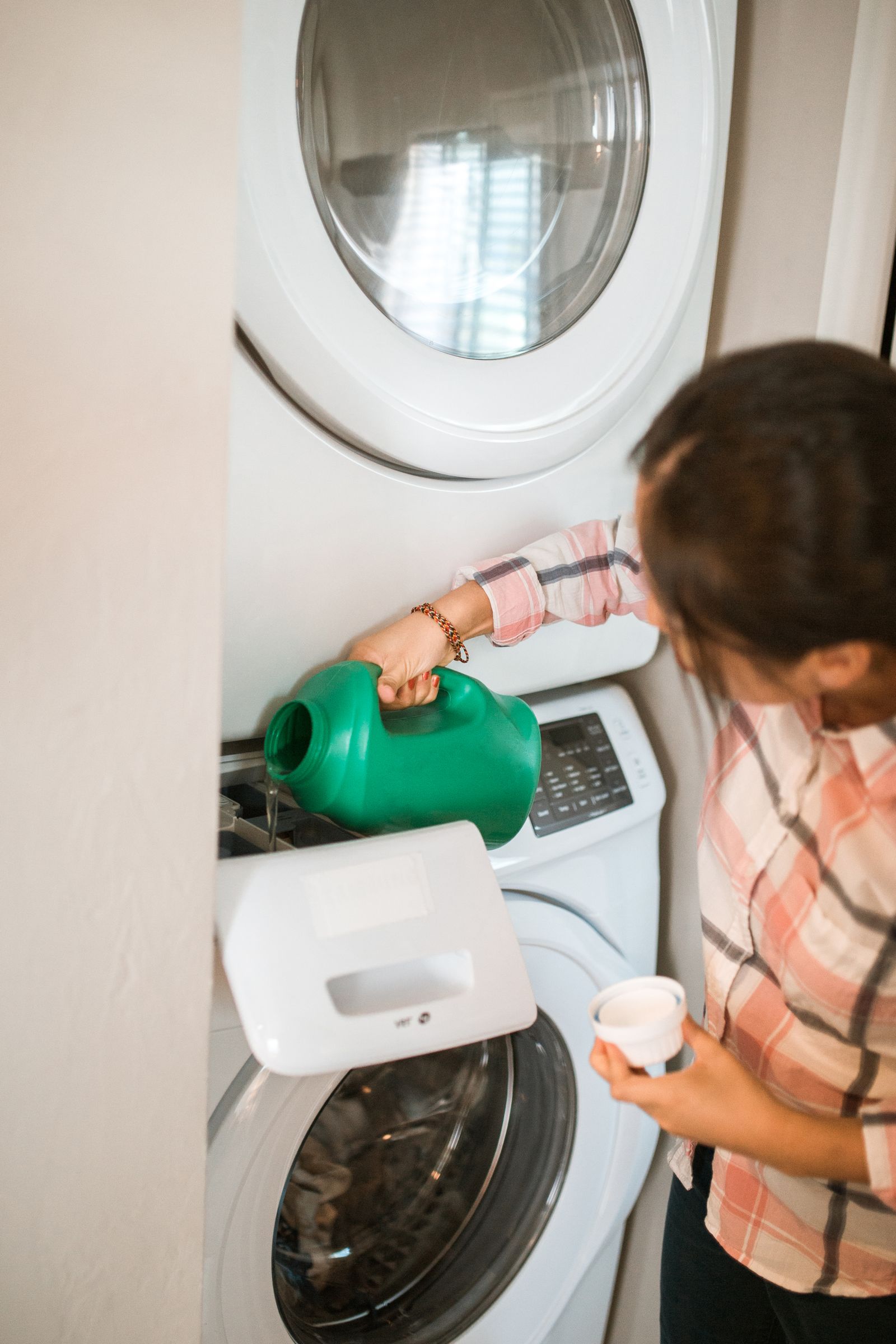
Stain by stain
Blood. Cold water only — hot water cooks the protein into the fabric. Soak in cold water with a little salt or oxygen bleach, then wash cold. On whites, hydrogen peroxide applied directly works well. Rinse and repeat rather than escalating to heat.
Grease and cooking oil. The dish-soap fix: work a drop of liquid dish soap (or a degreasing stain remover) into the stain, let it sit 10–15 minutes, then wash in the warmest water the fabric allows. Grease often looks gone when wet and reappears when dry — check before you fold, and re-treat if needed.
Coffee and tea. Flush with cold water from the back of the fabric. Rub in liquid detergent or oxygen bleach paste, soak 30 minutes, wash. Older coffee stains usually need an oxygen soak of a few hours.
Ink (ballpoint). Place the stain face-down on a clean cloth, dab rubbing alcohol from behind so the ink pushes out into the cloth, not deeper in. Keep moving to clean sections of cloth. Wash once the ink stops transferring. (Gel and permanent inks are harder — alcohol still helps, but manage expectations.)
Mildew (the forgotten wet-towel smell and spots). Soak in a solution of white vinegar and water, or an oxygen bleach soak, then wash in the hottest water the fabric tolerates. Sunlight genuinely helps — dry outdoors if you can. Mildew on white cotton can take diluted chlorine bleach; keep chlorine away from colours and synthetics.
Grass. Pre-treat with stain remover or a vinegar soak, work it in with an old toothbrush, then wash. Enzyme products earn their keep here.
Sweat and yellowing (collars, underarms, pillowcases). Make a paste of oxygen bleach (or baking soda) and water, work it in, soak at least an hour — overnight for built-up yellowing — then wash warm. Counter-intuitive but true: chlorine bleach can make sweat yellowing on synthetics worse, so reach for oxygen instead.
Red wine. Blot immediately, cover with salt to draw out moisture, then cold-water flush and an oxygen soak before washing.
The soak is the secret weapon
Half the fixes above end with “soak” because soaking does what a wash cycle can’t: time. An oxygen-bleach soak of 1–6 hours lifts stains and dinginess from a whole load at once, and it’s gentle enough for colours. For a stained item you care about, the soak-then-wash sequence beats any amount of aggressive scrubbing.
A note on white loads generally
Whites go grey mostly from overloaded machines, too little detergent, and washing with colours “just this once.” A separate, properly sized load with an oxygen booster keeps whites white far longer than bleach does — and if your whites include bulky bedding, our guide to washing comforters and bulky bedding covers the big stuff.
Big stains, big items
Stain treatment is harder when the item barely fits the machine — a comforter with a coffee spill needs room to soak, rinse, and actually get clean. Leaf Laundry’s machines run from 20 lb up to 80 lb jumbos at both stores, and the vending machines stock detergent and supplies if you arrive empty-handed:
Treat the stain at home, then give it a proper wash with room to move. That’s the whole secret.