

A comforter is the most common casualty of laundry day. Stuffed into a home washer, it comes out half-washed, lumpy, or — worst of all — still damp in the middle, which is where that musty smell comes from. The good news: bulky bedding is easy to wash well. It just needs three things a home machine usually can’t give it: space, water, and a thorough dry.
Why home washers struggle with comforters
A washer cleans by tumbling your items through water. A comforter crammed into a small drum can’t tumble — it sits in a soggy ball while the outside gets scrubbed and the inside stays dirty. The same problem hits in the dryer: no airflow through the middle means damp pockets that can mildew even after the surface feels dry.
As a rule of thumb, if you have to push the comforter down to close the lid or door, the machine is too small for it.
Before you wash: 3 quick checks
- Read the care label. Most synthetic comforters and many down comforters are machine washable. Silk, wool-filled, and some delicate or electric blankets are not — when in doubt, follow the label.
- Check for tears. Loose stitching and small rips get much bigger under the stress of a wash. Sew them up first, or the filling will escape and clump.
- Pre-treat stains. Dab stain remover or a little liquid detergent on spots and let it sit 10–15 minutes before washing.
Washing, step by step
- Load one comforter per machine. If you can, choose a front-loading washer — no centre agitator to wrap and twist the fabric. A queen comforter usually wants a large machine; a thick king or a down comforter wants the biggest one available.
- Use less detergent than you think. Bulky fibres trap suds. About half your normal amount is plenty, and it rinses cleaner.
- Pick the right temperature. Warm water handles most comforters well. Use hot only if the care label allows it and you’re dealing with dust mites or illness — hot water can damage some fills and fabrics.
- Add an extra rinse and spin. This is the step most people skip and the one that matters most: it flushes out trapped detergent and removes far more water, which makes drying faster and more even.

Drying: the part that decides everything
Most comforter problems are drying problems. Dry on medium heat (high heat can scorch synthetic fill) and give it time — a thick comforter can take much longer than a normal load.
- Break up clumps. Pause the dryer once or twice, pull the comforter out, shake and fluff it, and put it back in a different orientation. A couple of clean tennis balls or dryer balls in the drum help keep the fill distributed.
- Check the middle. When the timer ends, feel deep into the thickest part. Any cool, damp spot means it needs more time. Storing a comforter that’s even slightly damp is how mildew and odour happen.
- Cool down before folding. Let it sit for a few minutes after the cycle so residual moisture can evaporate.
Down comforters are fine to machine wash if the label allows, but they’re the most sensitive to trapped moisture — be extra patient with drying and the shake-and-fluff steps. Weighted blankets deserve a special note: many home machines have a weight limit well below a 20–35 lb blanket, and exceeding it can damage the machine. Check your blanket’s weight against the machine’s capacity, or use a commercial washer rated for it.
How often should you wash a comforter?
If you use a duvet cover, the cover needs washing every week or two and the comforter itself roughly every 2–3 months. Without a cover, wash the comforter monthly. Pillows benefit from a wash about twice a year.
When a laundromat is simply the right tool
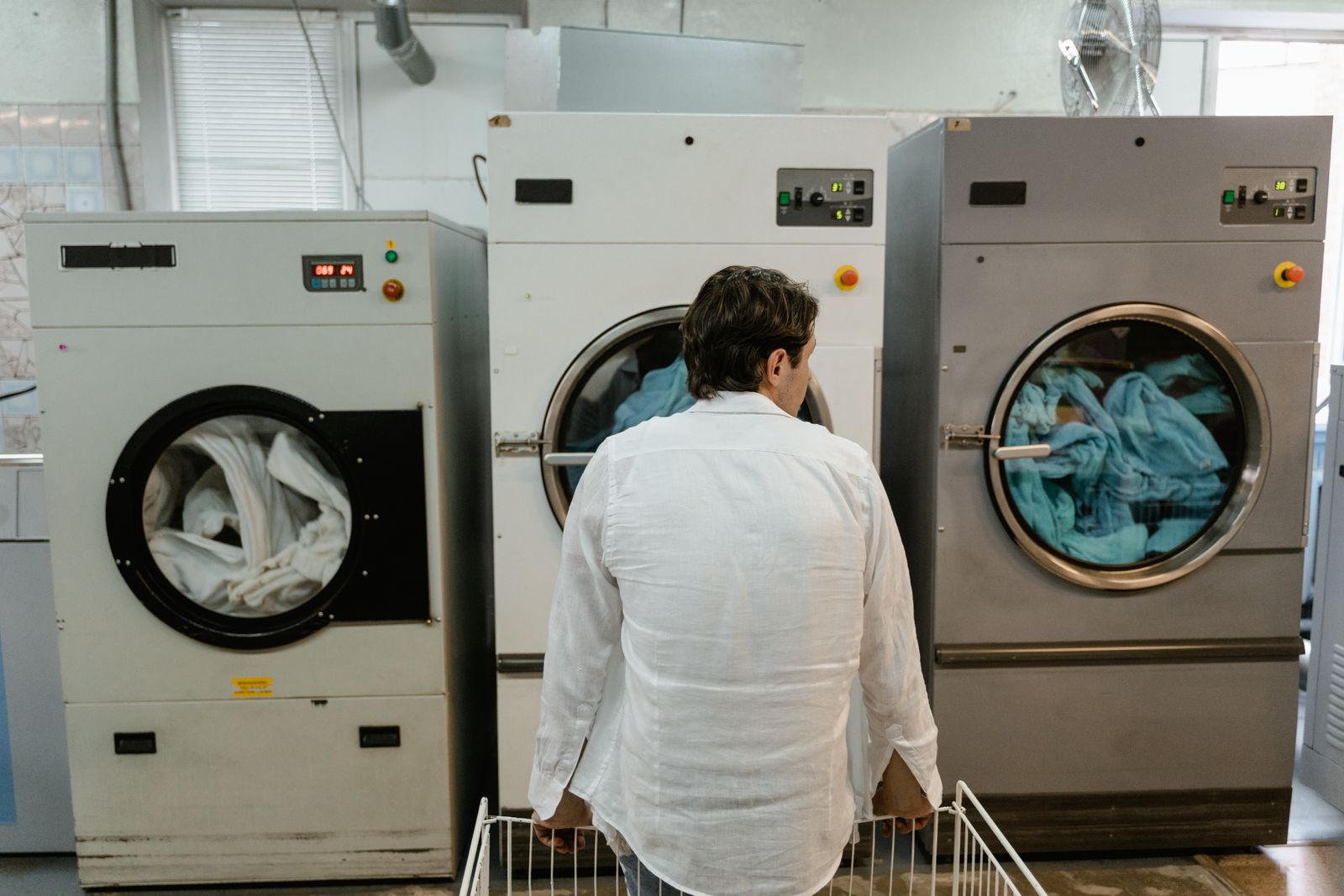
Commercial washers are built for exactly this job. At Leaf Laundry, our jumbo machines go up to 80 lb — a king comforter gets the water and tumble room it needs, and the high-speed extraction pulls out far more water than a home spin, so drying is faster and more even. Both of our stores are coinless (Leaf Card or app), have seating and free WiFi while you wait, and sell detergent on site if you forget yours:
Bring the duvet, the pillows, and the blankets in one trip, run them side by side, and the whole season’s bedding is done in about the time of one home load — washed properly, dried completely, no lumps.